
Ashdown Forest is home to several rare species of butterfly, from the purple-emperor to the Silver-studded Blue? The Forest’s mixture of open heathland, stands of trees and even peat bog means that it is an attractive place to live for many incredible insect species like these.
Walk across the open heath of Ashdown Forest on a warm afternoon in the summer, and if you’re lucky, you’ll catch a flash of iridescent blue skimming low over the heather. Blink, and it’s gone. This is the Silver-studded Blue (Plebejus argus), one of Britain’s rarest and most beautiful butterflies, making it one of the Forest’s precious residents.
It’s a small creature; no bigger than 30mm across. But its story is a big one, and it’s a story that Ashdown Forest, and the people who care for it, are working hard to keep going.
Look for a Flash of Silver Low to the Ground
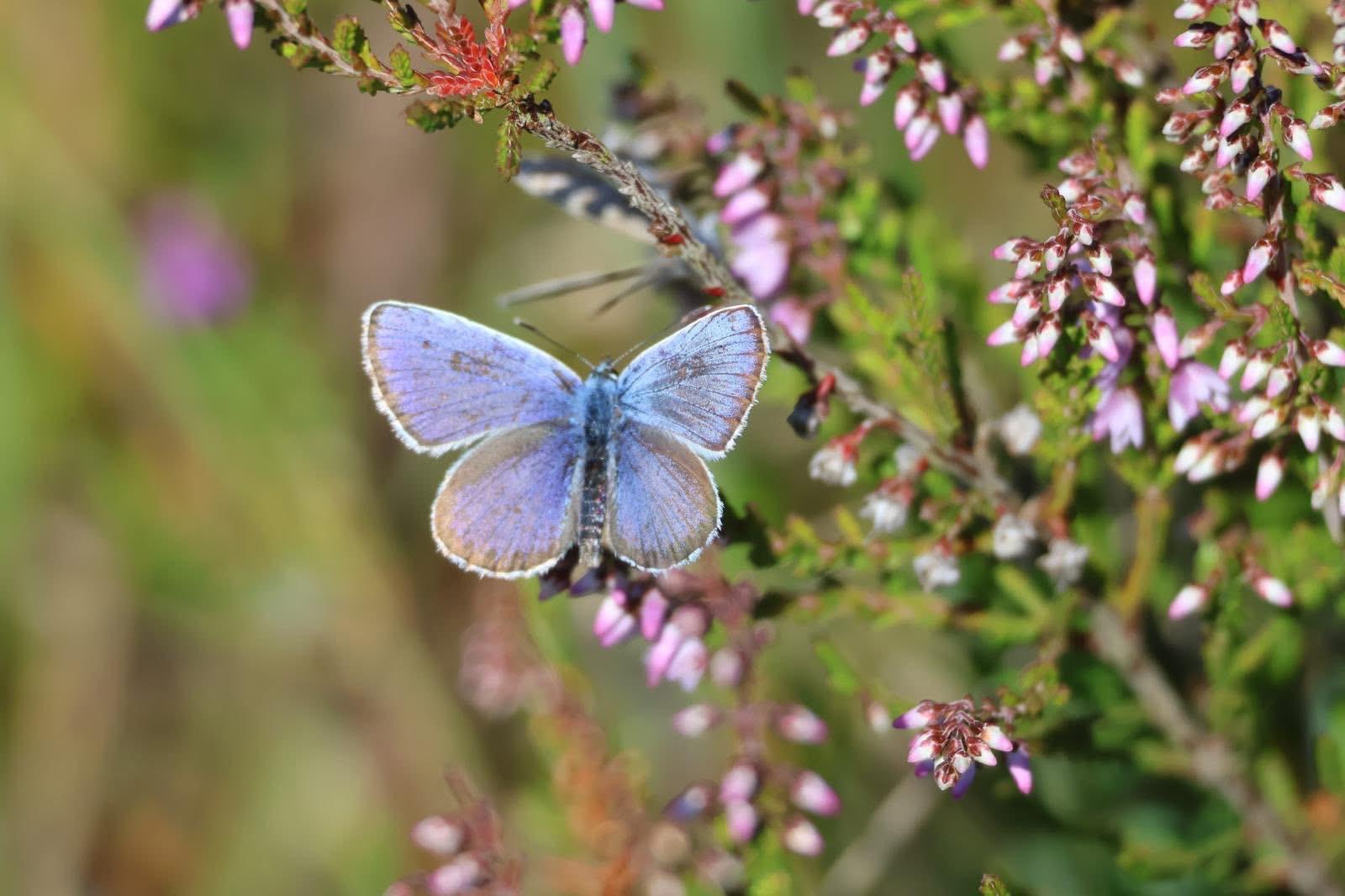
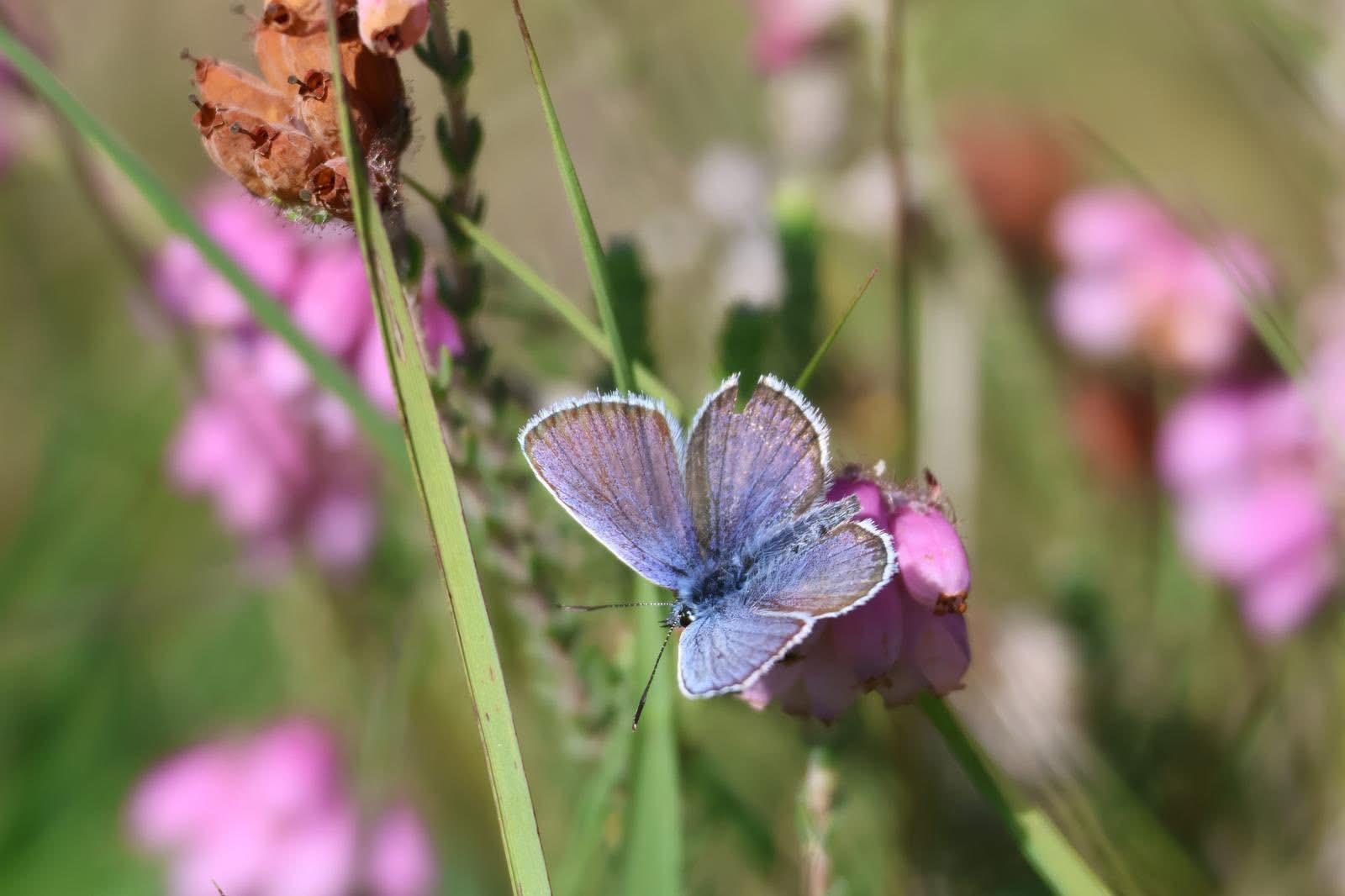
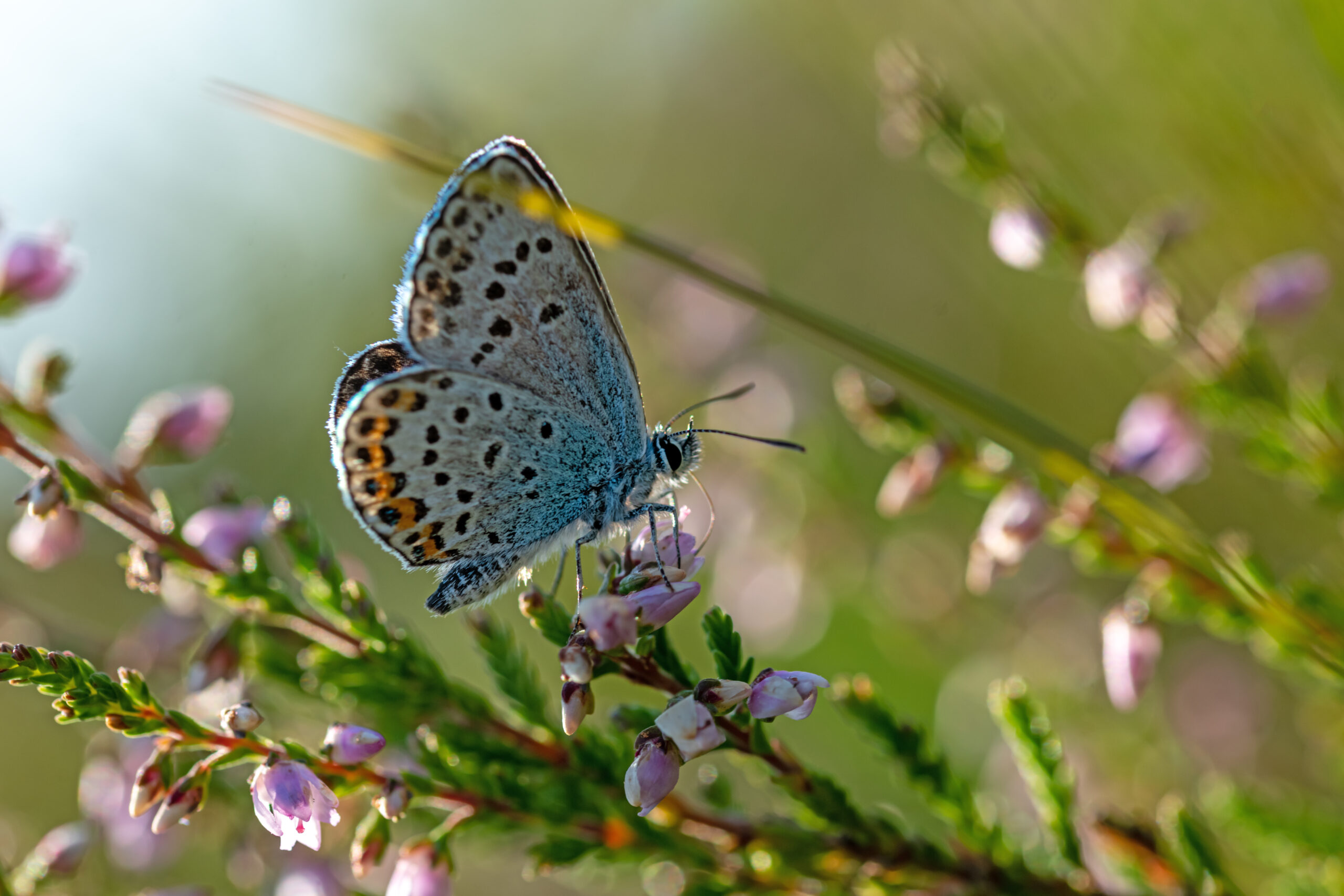
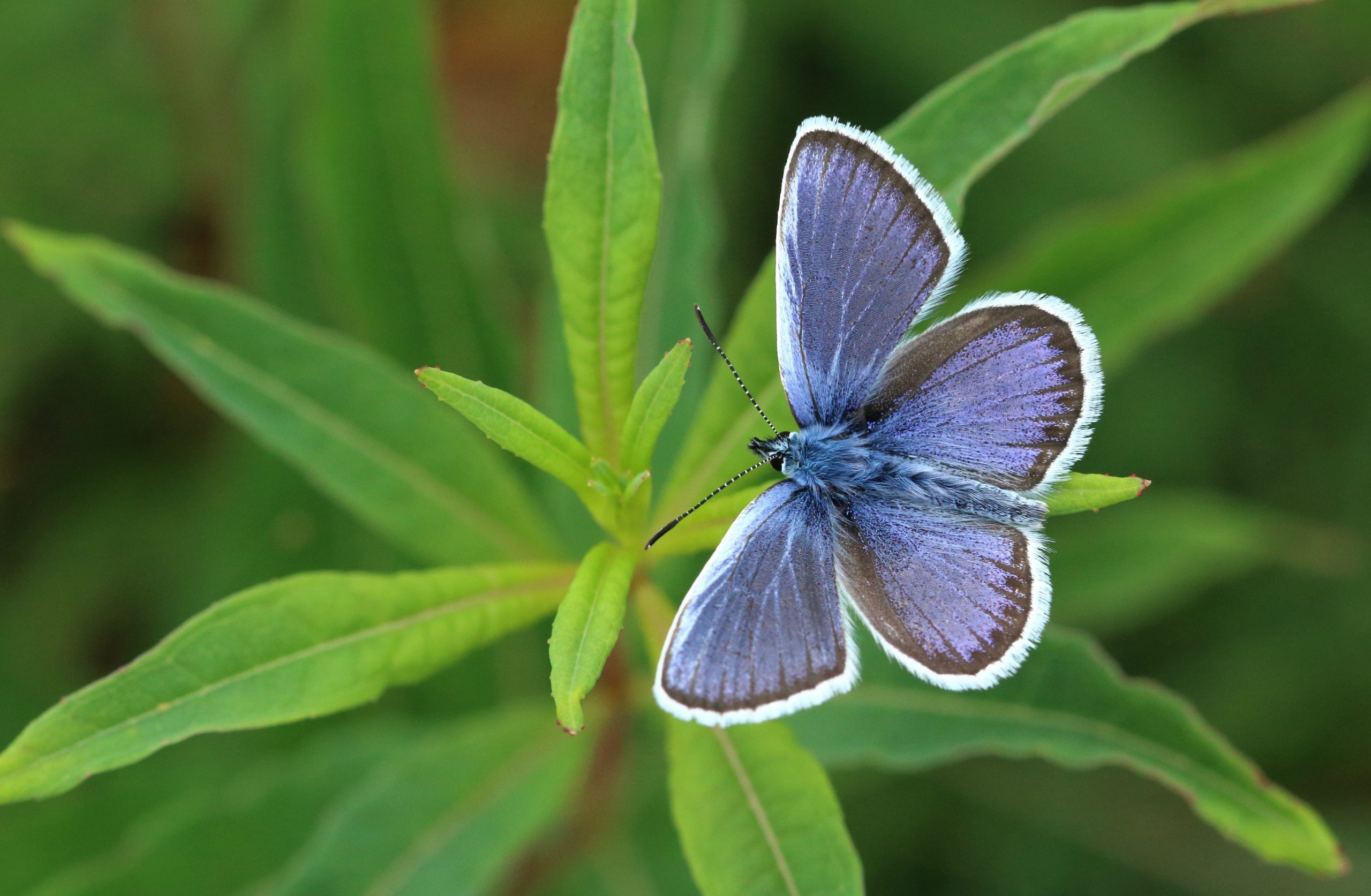
The male Silver-studded Blue is unmistakable: a rich, inky blue wing bordered in black, with a crisp white fringe. The female is more understated, brown with a row of orange crescents along the edge of her hindwing. But look closely at the underside of either sex’s wings and you’ll find the detail that gives the species its name: tiny, metallic blue-green spots, the “silver studs”, set among the orange and black markings.
It’s a butterfly that keeps close to the ground, fluttering low and fast over heather and gorse rather than soaring like some of its relatives. In the late afternoon, groups of them gather to roost together on sheltered bushes and grass tussocks, a habit that makes them easier to spot if you keep your eyes peeled.
A Rare Heathland Habitat that Comes with a Few Friends
Many species have dependent relationships, and the Silver Studded Blue is one of those. It turns out black ants are their best friend. The ants tend to and protect the caterpillars from predators in exchange for a sugary substance they secrete. The combination of lowland heathland’s abundant heathers and gorse with low vegetation and a few ant friends.
Why Ashdown Forest Matters So Much
Ashdown Forest is one of England’s great lowland heathland landscapes, and it’s one of only a handful of sites left in England and Wales where the Silver-studded Blue still survives in sustainable colonies because of its abundant heathers, gorse, low vegetation and open ground.
The butterfly is famously sedentary; studies suggest it likes to take it easy, rarely moving more than 20 metres in its entire life. While there are small numbers that move up to 1.5 km to set up new colonies, this is a rare event which means that once a colony is lost, it’s very unlikely to re-colonise the site on its own.
Records are improving – help us build and protect the population for the future
What we do know is more encouraging: recent surveys on the Forest have recorded some of the highest single-day counts of Silver-studded Blues seen in years, a sign that the right conservation work, done in the right places, can make a real difference.
The greatest current threat isn’t just habitat loss through neglect. It’s fire. The overgrown bracken and gorse that closes in on the butterfly’s low-growing heathland home is also, in hot, dry weather, a serious wildfire risk. A single fire in the wrong place, at the wrong time, could wipe out a colony that has taken decades to establish.
How the Forest is protecting Silver Studded Blues
The Ashdown Forest team is working to create what we’re calling a “superhighway for butterflies”: clearing overgrown gorse and bracken to open up and reconnect patches of heathland, giving Silver-studded Blues the room they need to meet, mate and spread between colonies. Then This work also helps reduce the risk of wildfires because bracken and gorse burn fast and hot, making wildfires spread quickly.
Careful on-going habitat management will help this butterfly hold on at Ashdown Forest when it has vanished from so many other parts of the country.
Key Facts About the Silver Studded Blue
- Latin name: Plebejus argus
- Family: Lycaenidae (the “blues”, “coppers” and “hairstreaks”)
- Wingspan: roughly 26–32mm, smaller than most people expect
- Flight season: July to August, with numbers usually peaking in July.
- Habitat: lowland heathland, along with some chalk grassland and sand dune sites
- Food plants: heather, bell heather, cross-leaved heath, gorse and bird’s-foot trefoil on chalk grassland,
- A partnership with ants: the caterpillars are tended by black ants, which protect them in exchange for a sugary secretion
- Legal protection: protected under the Wildlife and Countryside Act 1981, and listed as a Section 41 species of principal importance for conservation in England
- Restricted range: found in only a handful of sites across England and Wales, with Ashdown Forest among the most important strongholds in East Sussex
- Homebody habits: adults rarely travel more than around 20 metres, so isolated colonies struggle to recover once lost
Support our Centenary Crowdfunder to Help Protect this Rare Butterfly
The Silver-studded Blue’s future at Ashdown Forest depends on the space it has to live, breed and move between colonies. With your help, we can keep clearing that superhighway, giving this beautiful, easily-overlooked butterfly the room it needs to thrive for generations to come.
This summer, thanks to the Aviva Foundation, every donation made through our Crowdfunder campaign will be doubled. Inspired by the 100th birthday of one of the Forest’s other favourite (if rather less rare) residents, Winnie-the-Pooh, we’re looking ahead to the next hundred years and how we protect this special place. Money raised will go into our 100 Year Legacy Fund, supporting habitat and species projects like this one, to protect the Forest for the next century and beyond.
Be an Ashdown Forest hero, and help us write the next chapter of the Forest’s story.
